Showing posts with label ukraine. Show all posts

Thursday, February 13, 2025

Trump surrenders to Putin on the issue of the Ukraine war

John Bolton, former national security advisor to President Donald Trump during his first term in office, told CNN’s Kaitlan Collins that "President Trump has effectively surrendered to Putin before the negotiations have even begun." Bolton said:

Trump speaking at a podium
“The positions that Defense Secretary Hegseth announced in Brussels [on February 12] ― which I’m sure I’d be stunned if Trump didn’t convey them directly to Putin in their phone call [earlier that day] ― constitute terms of a settlement that could’ve been written in the Kremlin. Maybe they were written in the Kremlin and got out in propaganda channels.”

Source: Ed Mazza, John Bolton Says He Knows ‘Exactly’ What Trump Will Do Next, And It’s Frightening: The former national security advisor said the Trump administration’s latest position “could’ve been written in the Kremlin.” HuffPost, Feb 13, 2025

Greetings from Kyiv. I am in a bookstore, looking at a shelf full of survivors. These are books from Ukrainian publishers whose warehouses and offices were hit in the russian attack overnight on July 18–19. We need to support each other.

[image or embed]

— Yaroslava (@strategywoman.bsky.social) July 22, 2026 at 9:46 AM

Sunday, March 27, 2022

NYT opinion: Russia's invasion of Ukraine is fueled by fossils

Please check out Farhad Manjoo's opinion in the New York Times:

On one hand, it would seem uncontroversial to point out that Russia’s invasion of Ukraine is a war enabled and exacerbated by the world’s insatiable appetite for fossil fuels. It couldn’t not be so: Russia is a petrostate...By accelerating our transition to cheap and abundant renewable fuels, we can address two grave threats to the planet at once: the climate-warming, air-polluting menace of hydrocarbons and the dictators who rule their supply.

And yet American politicians on the left sure seem incapable of drawing out this connection, don’t they?

"If the 'climate lobby' were truly so powerful," Manjoo says, "it might have long ago prevented Europe from building its society upon a devilish bargain with Russian energy."

But that is past. Looking forward: Will the Democrats be able to pass Build Back Better legislation — with or without Sen. Joe Manchin?

"We’re in a Fossil Fuel War. Biden Should Say So." Farhad Manjoo. New York Times. March 24, 2022.

Also, Thomas L. Friedman:

This is our umpteenth confrontation with a petro-dictator whose viciousness and recklessness are possible only because of the oil wealth he extracts from the ground. No matter how the war ends in Ukraine, it needs to end with America finally, formally, categorically and irreversibly ending its addiction to oil.

"How to Defeat Putin and Save the Planet." Thomas L. Friedman. New York Times. March 29, 2022.


CNN explains:

"The September 2022 sabotage of the Nord Stream 1 and 2 pipelines, which pumped methane gas from Russia to Germany, was a major flashpoint in the energy war between Europe and Russia. Amid its invasion of Ukraine, Russia halted all gas supplies to Europe via the Nord Stream 1 at the time, blaming Western sanctions for causing technical difficulties. Authorities have yet to determine who was behind the sabotage.

At the time of the leak, UN Environment Programme detected on satellite a massive plume of concentrated methane. It later reported the ruptures were likely the largest single release of methane ever recorded."

— "Sweden’s climate pollution should have been down. The Nord Stream pipeline leak sent it skyrocketing," Rachel Ramirez, CNN, December 14, 2023

See also: "In near unanimous vote, European lawmakers call for Russia to be declared a 'terrorist' regime" CNN, October 2022.

heating pipes

October 2024: Russia appears to be getting help from North Korean soldiers to invade Ukraine.

We scrutinized unverified Russian social media videos and located North Korean soldiers training at a military complex in Russia’s Far East, potentially preparing for deployment. I know lots of ppl canceled subscriptions, so I’m sharing a gift link and threading screenshots here. wapo.st/3UqOYpz

[image or embed]

— Michelle Ye Hee Lee (@myhlee.bsky.social) October 26, 2024 at 10:31 AM

Trump pushes Erdoğan to stop buying Russian oil as shutdown looms in the US, by Maureen Chowdhury, Samantha Waldenberg and Adam Cancryn, CNN, September 25, 2025

Friday, March 18, 2022

Biden's fossil fuel reduction goals during Russia's war on Ukraine

As described in an article today in the Huffington Post, U.S. President Joe Biden

has committed to achieving net zero carbon emissions by 2050, meaning America’s forests, farm fields and clean-industrial projects would remove more carbon from the atmosphere each year than the country’s cars, power plants and factories emit. To achieve that goal, he passed an infrastructure bill with some renewable energy incentives and pursued a much more ambitious set of renewable energy tax credits as part of the stalled Build Back Better legislation. Using the powers of the executive branch, Biden also revoked authorization for the Keystone XL oil pipeline and raised federal fuel-economy standards for cars and trucks.

* * *

So long as Biden does not reauthorize Keystone XL, which would incentivize fossil-fuel extraction over the long term, the president’s efforts to limit the political fallout from higher gas prices are compatible with Biden’s plans to phase out fossil fuels, according to Andrew Dessler, an atmospheric scientist at Texas A&M University.

On the other hand, Biden has released oil from the Strategic Petroleum Reserve and this week decided to "increase liquefied natural gas exports to Europe to decrease [Europe's] reliance on Russian gas."

Source: "Gas Price Hikes Test The Climate Action Movement", by Daniel Marans and Alexander C. Kaufman, Huffington Post, 18 March 2022.

Update, 2026:

RBADVISERS: “.. Yet another inflation impulse. The US basically has NO STRATEGIC PETROLEUM RESERVE (SPR) anymore.”

[image or embed]

— Carl Quintanilla (@carlquintanilla.bsky.social) August 10, 2026 at 4:55 PM

There's a real question of how low the SPR can go. The answer is definitely not "0". 70m barrels is the stated technical floor. But problems are expected to start around 250m and we may struggle to actually pull from it—at least at this current pace. We're already under 300m.

[image or embed]

— Keith (@mosheroperandi.bsky.social) August 10, 2026 at 7:25 PM

See also: "War May Change How We Rely on Big Oil". It's a 3-minute read on Medium. Consider a paid membership on the platform.

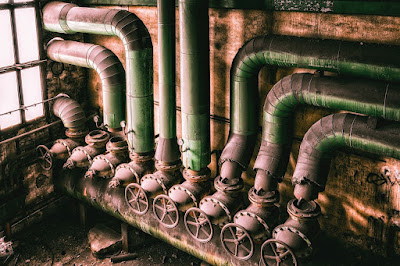
tubing with valves on the wall of a building
Image by Tama66 at Pixabay

Friday, March 4, 2022

The reason for the huge Ukrainian protests in 2014

In 2014, Ukrainians wanted to align themselves with the European Union, not with Russia. To this end, they favored the leader Yulia Tymoshenko over Viktor Yanukovych. People all over the world saw footage of politically motivated violence on the streets of Ukraine's capital city, Kiev.

Why did Ukrainians protest?

Protests erupted in Ukraine in late 2013 because President Viktor Yanukovych, caught between European and Russian trade interests, sided with Russia.

Ukraine had been part of the Soviet Union until its breakup in 1991; today it is its own sovereign nation. The Ukrainian language is encouraged there today, although many people also speak Russian, in part as a result of the former Soviet Union's "Russification" campaigns. Ukrainians have a range of opinions and feelings about their geographic and political position between Europe and Russia.

Yanukovych had been expected to sign the "Eastern Partnership" trade agreement with the European Union, but he suspended talks with the EU on Nov. 21, 2013. Had he continued talking to the EU, he would have faced trade sanctions from Russia, and the EU would have demanded that he free his political opponent, Yulia Tymoshenko, from prison.

The Tymoshenko-Yanukovych rivalry

Yulia Tymoshenko had a leading role in a 2004 revolution that quashed election results that favored Yanukovych. Tymoshenko served as prime minister from 2007–2010, then lost the 2010 election to Yanukovych. The next year, she began serving a prison term for abuse of authority stemming from an international business deal. The EU and US considered her a political prisoner.

Protests intensified in February 2014

Yanukovych made a deal with Russian president Vladimir Putin to cut gas prices in Ukraine, then passed an anti-protest law, but this did not satisfy protestors. People occupied Kiev City Hall until February 16, 2014, during which time their demands grew to include restoring the 2004 constitution and limiting the president's powers.

These protests coincided with the Winter Olympics held in Sochi, Russia, which brought worldwide media attention to the region. Kiev is about a thousand kilometers northwest of Sochi.

Days after the protestors left City Hall, there were deadly, fiery clashes in Kiev's Independence Square. Protestors made fire bombs, and police showed up in riot gear. The AP published a photo of a gray-haired person running while covering their face in their hands, as the shoulders of their sweater billowed with orange flame.

Dramatically, as medics took a 21-year-old woman to the hospital for a bullet wound to the neck, she used her phone to post to her Vkontakte social media account: "I am dying." She survived, but over a hundred others did not.

With hopes of stabilizing the situation, Ukraine's embattled president met with foreign ministers from Germany, France and Poland. British Prime Minister David Cameron and U.S. Vice President Joe Biden also spoke with him by phone. On February 20, Yanukovych signed a peace deal with the opposition protestors.

The next day, however, a different internal political resolution in Ukraine was manifested. Ukraine's parliament voted to oust Yanukovych, reinstate the 2004 constitution and free Yulia Tymoshenko from prison.

Yanukovych fled his residence. Tymoshenko appeared in Independence Square in Kiev on February 22 and told the cheering crowd that Yanukovych was a "terrible dictator." She has a back injury and sat in a wheelchair while speaking. "We've eliminated this cancer, this tumour," she said. Making clear the protestors' preference for working with the EU over working with Russia, she said: "Everyone has a right to take part in building a European, independent state."

Yanukovych was later discovered to have gone into exile in Russia. Parliament said in 2015 that he was no longer president, and a court convicted him in 2019 of treason and sentenced him to prison, though these were formalities since he remained in Russia.

The above is based on an article that I posted to another website on 27 February 2014. That website went offline later that year. I had read "The Day We Pretended to Care About Ukraine," published 20 February 2014 in Politico, in which Sarah Kendzior chastised American web surfers for succumbing to the allure of "disaster porn" without having a good understanding of the political issues. That concern is perpetually valid, so I am reposting my article to my own blog now.

2016 – 2020: The Trump administration

U.S. President Donald Trump was impeached in 2019 for trying to shake down Ukrainian President Volodymyr Zelensky. (Trump failed.) I wrote some articles about that, and when you search this blog for the Ukraine tag, you will find them.

2022: Can You Donate to Help Ukrainians?

Following Russia's invasion of Ukraine, the New York Times posted a donation guide for "How You Can Help Ukraine."

They recommend Direct Relief which "has supplied Ukraine with $26 million in medical aid over the past six months" and Save the Children which "has been engaged in Ukraine since the Russian annexation of Crimea in 2014," as well as Mercy Corps and International Medical Corps.

TGEU (Transgender Europe e.V.) has a list of organizations in Ukraine and in neighboring countries that are helping transgender Ukrainians with emergency needs during this time.

Donations made through CNN Worldwide and Public Good will be distributed among 39 organizations. (Information current as of March 15, 2022.)

Do you use PayPal? They also listed a dozen organizations for Ukraine relief. You may see different organizations depending on the country from which you access this page.

In December 2023, U.S. aid to Ukraine has been delayed, and this may impact other countries' willingness to give aid too. Without this finance, Ukraine is expected to lose the war.
See: "Western officials warn Ukraine is ‘certain to fail’ against Russia if US doesn’t provide more aid," Jim Sciutto, CNN, December 15, 2023

I also wrote

How Putin Played Donald Trump and the USA

War May Change How We Rely on Big Oil: Energy companies' reactions to Russia’s war on Ukraine


Photo: Yulia Tymoshenko, 2010, in Aachen. © GNU Free Documentation License, Version 1.2 or any later version Wikimedia Commons.

Thursday, March 3, 2022

Swan Lake, and TV Rain is gone

A few minutes ago, the Washington Post published "Russia’s last independent news station suspends broadcasts". TV Rain, the last remaining independent TV/radio news in Russia, has gone dark. Lateshia Beachum explains: "Russia blocked access to the station and declared it and fellow news station, Radio Echo, as foreign agents for their coverage of the war with Ukraine in which they used the terms “war” and “invasion,” usage of which the Kremlin has banned, the New Yorker reported." The reporters have fled. The story continues: "The last seconds of TV Rain’s broadcast, where one of its journalists walked off reportedly saying “no war,” was of a black-and-white broadcast of Swan Lake. The last time the station aired the performance was in 1991 when the Soviet Union was on the edge of collapsing, according to NBC News."

Image of the swan by Peter H from Pixabay

www.nytimes.com/2024/12/20/w... Very sad. Her stories were so important.

[image or embed]

— Cathryn Thurston (@drthurston.bsky.social) December 20, 2024 at 8:51 AM

Saturday, February 1, 2020

What the Republican senator has asked Americans to do

The data at the Trump Twitter Archive show that President Trump tweeted:
  • “no collusion” five times in 2017, fifty-three times in 2018, and ninety-five times in 2019.
  • “no obstruction” once in 2017, twelve times in 2018, and fifty-two times in 2019.
  • “no quid pro quo” eighteen times between Sept 24 and Dec 12, 2019.
  • “no bribery” and “no extortion” four times each in late 2019.

Nixon said "I am not a crook" only once on television, and everyone immediately knew he was a crook.

Trump's repetition wears down people's skepticism. It shouldn't. It's the same kind of transparently false defense as Nixon's. Trump denies committing these offenses because he knows he committed them, and he knows we know he committed them, and he knows that a lie can replace the truth if he repeats it enough. The disinformation has taken root, but we mustn't let it grow any further.

Sen. Lamar Alexander, a Republican who isn't seeking reelection, said he would vote against calling witnesses in Trump's impeachment trial. Nonetheless, he acknowledged that Trump had indeed done something wrong. Witnesses are not required at the trial, in his view, only because "there is no need for more evidence to prove something that has already been proven." After all, as he wrote in his January 30, 2020 a statement: "the president asked Ukraine to investigate Joe Biden and his son, Hunter; he said this on television on October 3, 2019, and during his July 25, 2019, telephone call with the president of Ukraine. There is no need for more evidence to conclude that the president withheld United States aid, at least in part, to pressure Ukraine to investigate the Bidens; the House managers have proved this with what they call a 'mountain of overwhelming evidence.'" What Trump did was "inappropriate" and "undermines the principle of equal justice under the law," Alexander said. There is no question "whether the president did it."

The Republican senator is telling us: When the president says there was "no quid pro quo," the president is lying to the public.

The Republican senator only denies that it is his responsibility to remove the president from office (at least for this particular offense, or perhaps at all, ever). Instead, he wants American voters to remedy this problem in the 2020 election.

Oh, sure, he still says he supports Trump's reelection. Except that's not what his latest statement entails. Figure it out for yourself what you believe, and —

Register to Vote


Sen. Marco Rubio, too, also a Republican, wrote on January 31 that even if Trump did commit "abuse of power," he still won't vote to remove the president from office. This provides a convenient way to avoid the question of whether Trump is guilty and whether Trump lies about his guilt. It also provides an excuse not to vote for witnesses: because even if the witnesses were to confirm Trump's guilt, Rubio will never vote to convict Trump, so the entire trial may as well simply end.


CNN reports that the Trump administration has made its "first official acknowledgment...that emails about the President's thinking related to the aid exist, and that he was directly involved in asking about and deciding on the aid as early as June." The revelation came from the Department of Justice, which admitted in a January 31, 2020 court filing that it has 24 emails which, in CNN's description, "related to the President Donald Trump's involvement in the withholding of millions in security assistance to Ukraine — a disclosure that came just hours after the Senate voted against subpoenaing additional documents and witnesses in Trump's impeachment trial, paving the way for his acquittal." The Office of Management and Budget argues that the emails cannot be revealed to the public nor even to Congress precisely because they reveal "Presidential decision-making about the scope, duration, and purpose of the hold on military assistance to Ukraine." (Which is funny reasoning, since that is exactly the subject of the impeachment trial that has not yet officially concluded.) The DOJ's admission that it has relevant evidence "came just hours after the Senate voted against subpoenaing additional documents and witnesses in Trump's impeachment trial, paving the way for his acquittal."

Thursday, November 7, 2019

The 'quid pro quo' in the Trump/Zelensky call transcript

Transcript of the July 25, 2019 phone call

Caveat within the transcript itself: "The text in this document records the notes and recollections of Situation Room Duty Officers and NSC policy staff assigned to listen and memorialize the conversation in written form as the conversation takes place. A number of factors can affect the accuracy of the record, including poor telecommunications connections and variations in accent and/or interpretation."

Gordon Sondland, testifying publicly on Nov. 20, said:

...members of this committee have frequently framed these complicated issues in the form of a simple question: Was there a 'quid pro quo?' With regard to the requested White House call and White House meeting, the answer is yes.

In late September, a week after news broke that a whistleblower had reported an inappropriate call President Trump had with Ukraine's President Zelensky, Trump attempted to defend himself by releasing what he referred to as a "transcript" of the call.

The document itself says it is "not a verbatim transcript."

Yet, beginning on Oct. 2, Trump has repeatedly referred to the document as an "exact" transcript of the conversation, Philip Bump explained in the Washington Post.

Lt. Col. Alexander Vindman, who was on the call, subsequently testified that he remembers elements of the call that are not included in the transcript.

There is a quid pro quo in the interaction even if the words "quid pro quo" are not present. Monica Hesse wrote in the Washington Post:

When Hollywood mogul Harvey Weinstein invited a woman actor to his hotel room, the conversation (according to tape) went like this:

“Don’t ruin your friendship with me for five minutes,” he warned her. He said he was a “famous guy,” and if she left, she should “never call me again.”

One thing he didn’t say was, “This is a quid pro quo in which you’ll sleep with me or lose your career.”

Sentient humans could read between the lines.

She went on:

We have read Trump instructing Zelensky, 'I would like you to do us a favor.' We have read him saying, 'The United States has been very, very good to Ukraine.' We’ve combed through it all.

One thing Trump did not say is, 'This is a quid pro quo in which you’ll give me dirt on Joe Biden; and, in exchange, I’ll stop withholding your aid.' ... He didn’t say, 'Let's move onto the illegal part of the conversation now.' He certainly didn’t say, 'Real quick, let me abuse my power.'

But when we talk about what Trump said on that phone call, we’re really talking about what powerful people never need to say at all.

Similarly, Lt. Col. Vindman also recognized it as a demand.

Trump's refrain, "Read the transcript," as if the transcript exonerates him, "is not an invitation for truth-seeking," Hesse said, but rather "a disingenuous feint provided by a powerful man who, like all people in power, knows that his wishes will be treated as commands, and his subtexts will be treated as boldface type." We need to acknowledge what we see in the interaction. As Hesse put it: "It’s such a bizarre folly to pretend we don’t understand what people are saying. It’s such a maddening exercise, to point at a collection of words and insist that the true meaning is in the white space between them. It makes you feel crazy."

Ukraine knew what Trump wanted (an investigation of the Bidens) as early as May.

Others have tried to argue that there was no quid pro quo in the request to investigate the Bidens because Ukraine didn't know the money was being withheld. Ukraine would certainly have known that they had not yet received money, however. And, while Ukraine may not have known at the time of the July 25 call that the money was deliberately held back pending their explicit compliance with launching an investigation of the Bidens, they knew later, in August.

Sondland's public testimony on Nov. 20 "disrupts — actually, destroys — the defenses of both the White House and congressional Republicans," Chris Cillizza explained for CNN, "who have insisted that the Ukrainians had no clue that there were any preconditions to getting what they wanted most — a meeting between Zelensky and Trump and then, later, the release of the nearly $400 million in military aid from the US to Ukraine." Sondland testified: "I told President Zelensky in advance that assurances to 'run a fully transparent investigation' and 'turn over every stone' were necessary in his call with President Trump."

Sondland also testified that Zelensky was supposed "to announce the investigations. He didn't actually have to do them, as I understood it." A request from Trump which, as Chris Cillizza pointed out in another article, is more consistent with Trump attempting to generate a PR disaster for his political rival Joe Biden in the 2020 election campaign rather than having a genuine interest in identifying and stopping corruption in Ukraine.

Others have tried to argue that there was no quid pro quo because Ukraine eventually got the money. This is a bad argument. Giving the money was the quid in exchange for which they requested a quo. And even if the entire deal fell apart, attempted crimes are still crimes.

Downplaying an incomplete crime is called the "Sideshow Bob" defense, after a Simpsons character who complained in a 1994 episode, "Convicted of a crime I didn’t even commit. Hah! Attempted murder? Now honestly, what is that? Do they give a Nobel Prize for attempted chemistry? Do they?"

In Trump's case, the crime might even have been completed, since the goal was to temporarily withhold aid to prompt compliance from Ukraine; Trump may not have aspired for the hold to be permanent. Furthermore, releasing the aid may not have been Trump's decision. "It wasn’t Donald Trump who released the promised military aid to Ukraine," Mary Papenfuss wrote; it was federal lawyers who declared it was illegal for the White House Office of Management and Budget to block the aid. Because of this decision, a third of the money was quickly released, and, several days later, Trump claimed he had voluntarily chosen to release it.

Others (notably, acting White House chief of staff Mick Mulvaney) have tried to argue that such quid pro quos are done all the time and should not be a basis for impeachment. Ultimately, whether the offense is impeachable is up to Congress to decide (as per Article II, Section IV of the Constitution). A Vox/PerryUndem/Ipsos poll conducted November 5-6, 2019 found a partisan split about whether this quid pro quo is tolerable. A clear majority of Americans from both major political parties believe that “abusing the powers of office for political advantage” or “for personal enrichment” is a “high crime or misdemeanor.” (93% Democrats and 67% of Republicans have this assessment of “political advantage.” 95% of Democrats and 82% of Republicans have this assessment of “personal enrichment.”) However, when the question is narrowed to ask about “a president of the United States pressuring another country to investigate a political rival,” the Republicans drop out. (77% of Democrats believe this is a “high crime or misdemeanor,” but only 22% of Republicans make the same assertion.) Furthermore, Republicans are more likely to excuse this behavior as “something presidents do all the time.” (28% of Democrats say so; 65% of Republicans say so.) In other words, they don't think it's an abuse of presidential powers.

Sen. Ron Johnson (R-Wis.) said on Nov. 17 that the quid pro quo situation could have been better "taken care of this behind the scenes," since "most people wanted to support Ukraine. We were trying to convince President Trump." He said it was unfortunate that a whistleblower "exposed things that didn’t need to be exposed." (Apparently, the thing that didn't need to be exposed was the president's ignorant machinations.)

Johnson said he would provide a written statement.

Wednesday, October 30, 2019

Is Trump's time up? (impeachment 2019)

Trump admits that he brought up the Bidens on a phone call with Ukraine's president. A Trump adviser said, as CNN reported on Sept. 23, "This is a serious problem for us. He admitted doing it." More specifically, the whistleblower's Aug. 12 claims have been corroborated, as shown by the New York Times on Oct. 26. And witnesses have begun to testify against him (see my blog post published yesterday).

Trump's personal lawyer Rudy Giuliani is reduced to arguing that Trump referred to the Bidens only briefly on the phone call. Exactly how that is supposed to help, I don't know.

Tomorrow (Oct. 31), the House plans to vote on formalizing the inquiry. Speaker of the House Nancy Pelosi said that having procedures will "eliminate any doubt as to whether the Trump administration may withhold documents, prevent witness testimony, disregard duly authorized subpoenas, or continue obstructing the House of Representatives." The procedural document is eight pages long and is expected to pass.

When the impeachment inquiry is completed, the government will decide whether to proceed to an impeachment trial. That outcome looks likely, as a New York Times editorial said on October 18, and "that will force Senate Republicans to choose. Will they commit themselves and their party wholly to Mr. Trump, embracing even his most anti-democratic actions, or will they take the first step toward separating themselves from him and restoring confidence in the rule of law?"

As of late November, Democrats are discussing whether the articles of impeachment should focus on the Ukraine scandal or be expanded to include the arguably criminal allegations in the Mueller report.

Will this end his presidency? Maybe. Here's some reasons why it might not, followed by reasons why it might. Then, I quote some opinions.

"No": Reasons why this scandal won't end his presidency

A certain demographic — historically powerful in the United States, though their dominance has waned somewhat — is nearly unanimously in favor of Trump remaining in office. In an October 2019 column, Michael Gerson wrote that "an extraordinary 99 percent of Republican WEPs [white evangelical Protestants] oppose the impeachment and removal of the president." Robert Jeffress appeared on Fox News citing the 99 percent statistic and claimed that evangelicals see impeachment of Donald Trump as an impeachment of their values. (Which is odd, because Trump's personal values are decidedly not in line with American Christian conservatives' and never have been.)

Elected Republican leaders are mostly not on board.

Rep. Francis Rooney (R-FL), as discussed by Jennifer Victor on Oct. 24,
recently indicated that he might support impeachment, and then announced just one day later that he would not be seeking reelection. So, even though support for Trump is eroding, and support for impeaching is growing, most low-ranking Republicans still don’t feel like they can criticize the president and live to see another election.

One newspaper's inquiry found Republicans largely unwilling to discuss the matter. In late October, Chris Cillizza wrote for CNN, "the conservative Daily Caller website asked the offices of each of the 53 Republican senators whether they opposed the impeachment and removal of President Donald Trump. Just seven of them said yes. ... The seven who did confirm they oppose impeachment to the Caller are: Sens. James Inhofe (Oklahoma), Cindy Hyde-Smith (Mississippi), Thom Tillis (North Carolina), Roger Wicker (Mississippi), Mike Rounds (South Dakota), Rob Portman (Ohio) and Jerry Moran (Kansas). ... Of the 46 Republican senators who didn't expressly reject impeachment, almost half — 22 — simply declined to comment to the Caller."

However, as of Oct. 26, fifty senators (all Republicans) had signed a nonbinding resolution to condemn the House impeachment inquiry. There remain three Senate Republicans who have not signed it: Mitt Romney of Utah, Lisa Murkowski of Alaska, Susan Collins of Maine. So far, then, exactly half of all Senators have signed this nonbinding resolution. Nonetheless, wrote CNN's Zachary B. Wolf, "the show of Republican cohesion does demonstrate that Trump is in little danger of being removed from office by impeachment, at least right now. It would take 67 senators to remove him." In other words, at the conclusion of the impeachment trial (which has not yet begun — only the inquiry is underway), all 47 Democrats and 20 Republicans would have to vote to remove Trump from office. Regarding the resolution condemning the House's inquiry, Senate Majority Leader Mitch McConnell, as of Oct. 29, said he had not decided whether to bring the resolution to the floor for a vote. He said he would wait to see if the House's formalization of the impeachment inquiry would contain "due process protections" for Trump.

Juleanna Glover believes the impeachment vote could be held secretly. Article I, Section 3, of the Constitution says only that two-thirds of the Senate must be present. The Senate can set its own rules for the impeachment, but it will need "a simple majority — 51 of the 53 Senate Republicans — to support any resolution outlining rules governing the trial. That means that if only three Republican senators were to break from the caucus, they could block any rule they didn’t like." Glover said:

...it’s not hard to imagine three senators supporting a secret ballot. Five sitting Republican senators have already announced their retirements; four of those are in their mid-70s or older and will never run for office again. They might well be willing to demand secrecy in order to give cover to their colleagues who would like to convict Trump but are afraid to do so because of politics in their home districts. There are also 10 Republican senators who aren’t up for reelection until 2024 and who might figure Trumpism will be irrelevant by then. Senators Mitt Romney and Lisa Murkowski have been the most vocal Republicans in expressing concerns about Trump’s behavior toward Ukraine. Other GOP senators have recently softened in their defense of him, as well — all before the House has held any public hearings.

There’s already been some public speculation that, should the Senate choose to proceed with a secret ballot, Trump would be found guilty. GOP strategist Mike Murphy said recently that a sitting Republican senator had told him 30 of his colleagues would vote to convict Trump if the ballot were secret. Former Senator Jeff Flake topped that, saying he thought 35 Republican senators would vote that way.

Sen. Lindsey Graham has enabled Trump up to this point. He may continue to do so. He was quoted in the Washington Post as having said on Oct. 15:

“Sure. I mean ... show me something that ... is a crime,” said Sen. Lindsey O. Graham (R-S.C.) to Axios on HBO in an interview on Tuesday. “If you could show me that, you know, Trump actually was engaging in a quid pro quo, outside the phone call, that would be very disturbing.” * * * [Sen. Lindsey] Graham’s comments could signal an inflection point in this impeachment debate. He has in the past twisted and omitted facts to protect Trump, and he’s warning that at some point, he won’t anymore.

Are we at that point? One month later, apparently not yet, and it's unclear what will bring us to that point.

"Yes": Reasons why this scandal will end his presidency

First of all, Americans agree that this type of behavior &mash; seeking foreign help in a presidential election — is bad. There is bipartisan agreement on this. In mid-October, a poll found that over 80 percent of Republicans, evangelicals and people living in rural areas disapprove of a president asking for election assistance from a foreign government.

While theoretical disapproval of the crime does not always translate into specific support for impeaching Trump, a majority of Americans do support the impeachment inquiry. A poll in early October 2019 of the American public found that 1 in 5 Republicans support at least an impeachment inquiry (if they have not already personally reached the conclusion that Trump should be removed from office). Across both parties, then, more than half of Americans support at least an impeachment inquiry. Nearly 2/3 of Americans said that Trump should cooperate with the impeachment inquiry; that is to say, some Americans who do not support the inquiry nevertheless believe that Trump ought to cooperate with it. At the end of the month, another poll had similar results, finding that 49 percent of Americans (including 18 percent of Republicans) want Trump removed from office.

Similar findings come from Fox News, NBC News/Wall Street Journal, the University of Texas and the Texas Tribune, and Washington Post/ABC News.

On November 3, Trump told reporters that he rejected these numbers. "I have the real polls," he claimed. He said they reveal that "people don’t want anything to do with impeachment." He did not, of course, say what these polls were. They probably do not exist.

During an Oct. 30 lunch meeting, Senate Republicans discussed changing their talking points: that Trump's request was obviously a quid pro quo, but that quid pro quos are common in foreign aid. During that meeting, Sen. Ted Cruz (R-Tex.) said that a quid pro quo is only illegal if there is "corrupt intent," that is, if Trump had "a culpable state of mind." Since crimes do not usually depend on the criminal's state of mind (which is difficult to determine), this argument may not fly.

On Nov. 4, a Huffington Post reporter categorized all 53 Republican Senators' public statements. Only a slim majority (28) say there's nothing to see here, while the rest (25) have some reservations or have chosen not to publicly comment yet. Their positions are:

"The Call Was Totally Fine" (28 senators)
"The Call Was Bad But Not Impeachable" (7 senators)
"The Call Was Wrong" (4 senators: Thune, Murkowski, Sasse, Romney)
"I’m A Potential Juror And Shouldn’t Speak" (4 senators: Collins, Isakson, Young, Enzi)
"Criticized Impeachment But Have Not Weighed In On Call" (10 senators)

On Nov. 7, Sen. Marco Rubio (R-FL) said that, in an impeachment trial, he will "look at all the evidence like a juror, which is what the Senate serves as, and then I am going to make a decision and what’s based on the best interest of the country given the facts," rather than reacting to "what’s being leaked in the press or what’s being reported or what politicians are saying.”

Nikki Haley, who served as U.S. Ambassador to the U.N. during the first two years of Trump's term, claimed that there was no quid pro quo because Trump was ultimately unsuccessful in his attempt to withhold aid from Ukraine. (He did, however, delay it for months.)

One indication that the Trump administration is panicking is that they are asking foreign governments to discredit U.S. intelligence findings on this scandal and related scandals, including the Mueller Report. The Independent:

Trump and Barr have also been asking other foreign governments for help in investigating the FBI, CIA and Mueller investigators. The US president has called on the Australian prime minister Scott Morrison for assistance, while the attorney general has been on similar missions to the UK and Italy.

And the information being requested has left allies astonished. One British official with knowledge of Barr’s wish list presented to London commented that “it is like nothing we have come across before, they are basically asking, in quite robust terms, for help in doing a hatchet job on their own intelligence services”.

Trump also, according to the Washington Post on Nov. 6, asked Barr to hold a news conference stating that the Trump/Zelensky phone call was not illegal, though Barr refused.

Republican leaders have to make a decision. Either they ally themselves with Trump at all costs, without qualifying their statements, whatever the evidence against him, or they forgo Trump's good will. A middle-of-the-road, wait-and-see position, such as that attempted by Sen. Rob Portman (R-OH) — who said that Trump's attempted quid pro quo was "not appropriate" yet isn't "impeachable" — is both "gutless" and "ultimately foolhardy, since Trump will view it as an attack," as Michelangelo Signorile wrote on Oct. 30. Signorile said: "There’s no one left in the White House with good instincts who has any influence on him. He’s making all of the decisions now — decisions that even Republicans admit are terrible," and he "no longer has anyone competent to speak for him either, and the GOP knows this too."

Indeed — supporting Signorile's point — Lindsey Graham says that Trump is too incompetent to do anything corrupt and therefore cannot be impeached.

Sen. Lindsey Graham, who chairs the Senate Judiciary Committee, is determined to cultivate his own incompetence by referring to the impeachment inquiry as "B.S." while admitting not having read the materials.

Graham also insists that the impeachment inquiry is invalid unless the original whistleblower's identity is outed and the whistleblower testifies before Congress. "It's impossible to bring this case forward in my view fairly," he said, "without us knowing who the whistleblower is and having a chance to cross examine them about any biases they may have. So if they don't call the whistleblower in the House, this thing is dead on arrival in the Senate." To the contrary, however, there are laws to protect the identity of whistleblowers.

It is not necessary to cross-examine the person who reported the crime. And it is a little strange that the defendant would want another one of his accusers to testify, when so many of them have already spoken against him. Outing the whistleblower would simply place the whistleblower at personal risk. It is to Trump's media advantage to paint the idea that he has an anonymous enemy in the government and that this enemy is untrustworthy and can be discredited simply because he or she is anonymous. Accordingly, Trump refused the whistleblower's offer of written testimony. He doesn't want to know what the whistleblower has to say; he wants the whistleblower to reveal his or her face.

Also, while a criminal defendant has a Sixth Amendment right to question their accuser at trial, it is also the generally held legal opinion that a sitting president cannot be indicted, which is to say that Trump is not a criminal defendant and it isn't clear that the Sixth Amendment right applies to him. Trump will go on trial by Senate on the question of whether he abused the power of his office and the consequence is that he may lose his job. That is not a criminal trial, and it isn't clear he has the right to cross-examine anyone.

He sows confusion with this line of argument. Demanding the whistleblower's identity (which legally can't be released) is a tactic to delay the process and divert the focus from other people's testimony. It also intimidates anyone else from reporting crimes in the future, anonymously or otherwise, about Trump or about anyone else.

Similarly, Sen. Thom Tillis (R-NC) denies that Trump asked Ukraine to investigate the Bidens, which is fascinating, since going back to September, Trump himself has admitted doing that. He made a televised request apparently to Ukraine on Sept. 20 and to China on Oct. 3. From the time of the whistleblower's initial report in late September through early November, Trump tweeted about the Bidens over 50 times, generally alleging that they did something corrupt related to Ukraine. Trump is clearly asking Ukraine to investigate the Bidens. This is not in dispute.

Sen. John Kennedy, standing next to Trump at a rally, had this disingenuously apologetic ad hominem for Speaker of the House Nancy Pelosi for her attempt to impeach Trump: "I don’t mean any disrespect, but it must suck to be that dumb."

Rand Paul, who once promoted whistleblower protections...

...now wants to out the whistleblower.

Ultimately, Trump may be unable to stop people from testifying. As explained in a Huffington Post article on Nov. 15:

Someone who refuses to honor a congressional subpoena risks being held in contempt of Congress, which results in, at the very least, hefty legal bills. Someone who honors the subpoena risks being fired. The latter choice, though, can make the subpoenaed witness seem more sympathetic to the public while making the White House appear both vindictive and secretive.

'Aside from firing them or revoking their clearance, the president has no power to unilaterally do anything against these individuals,' [national security lawyer Bradley] Moss said.

Opinions

"Anyone who followed the president’s directive to 'read the transcript'...knows that even this sanitized version of the President's call exposes the scheme to public view," Joyce White Vance wrote for Time. "Far from a perfect call, it was a scheme to have a foreign country intervene in our election. It was so far off the mark that when White House officials learned about it, they stashed the record of it on a highly classified server, apparently in hopes it wouldn’t come to light."

James Carville had said Trump appears to be "done." Premature, perhaps, but let's see.

Nancy Gibbs suggested in October 2019 that Trump wants to be impeached because it lets him project an image that he is a victim.

"The polls are moving for a reason: Republicans and independents, even those serving in Congress, may not agree where the line is, but they know there’s one somewhere, and it does not involve a shooting on Fifth Avenue.

Consciously or not, might he conclude that impeachment and removal is his least bad option for escaping the 'great white jail'? Resigning is out; that’s for quitters. Defeat in 2020 is worse; losing is for losers. But being impeached and removed from office is the one outcome that preserves at least some ability to denounce the deep state and the quislings in the Senate who stabbed him in the back, maintain his bond with his tribe, depart the capital and launch a media business to compete with the ever more flaccid Fox News. (This all presumes that President Pence pardons him, for which there’s some precedent.) Impeachment lets him go down fighting, and he will call it rigged and unfair and illegitimate and a coup, all of which would be harder if the verdict was rendered next November by millions of voters."

Is he making maximal use of the messaging opportunity? No — he can't. He lacks "message discipline," meaning he changes his story every time he opens his mouth. Even Sen. Lindsey Graham cannot deny that the president is suffering from this critical personality flaw. At least when Bill Clinton was impeached, Graham pointed out, he had a team that was "on message every day."

Stephen Collinson's analysis for CNN on Oct. 25: "The President's wild attacks on witnesses — he blasted 'Never Trump Republicans' this week who criticize him as 'human scum' — may also be counterproductive and alienate undecided Americans."

"Trump has been behaving nearly hysterically in public, his language increasingly reckless and vulgar," Elizabeth Drew wrote on October 15. "And he’s made major foreign-policy errors that have enraged members of his own party." She added: "Trump’s defiance of Congress virtually guarantees that he will be impeached for obstruction, among other possible charges." Impeached, yes; but whether he will be convicted, or otherwise rejected by his own party, is another matter.

Former Republican Congressman Charlie Dent said on television: "People have to stand up and say...this is wrong.”

Just before the first televised impeachment hearings began on Nov. 13, Stephen Collinson wrote of the president: "His fate will have sweeping consequences for the future understanding of powers vested within the presidency itself. The hearings will test whether the ancient machinery of US governance can effectively investigate a President who ignores the charges against him and fogs fact in defining a new post-truth political era."

The accusations

could hardly be more grave. He is effectively accused of committing a crime against the nation itself and the political system that guards its freedoms.

Specifically, Democrats charge Trump with conspiring with a foreign power to influence a US election, an offense many observers believe satisfies the impeachable standard of "Treason, Bribery or other high crimes and misdemeanors."

The eventual case may encompass campaign finance offenses, the flouting of his presidential oath to uphold the law and the Constitution and allege obstruction over his withholding of witnesses and evidence. In more symbolic terms, it would validate the fears of America's founders of one of the greatest threats to their democratic experiment.

Former Rep. Charlie Dent (R-Pa.), who left Congress in 2018, told CNN on Nov. 29 that he'd spoken to many Republican members of Congress, and "they’re absolutely disgusted and exhausted by the president’s behavior...They resent being put in this position all the time." He said they believe they have to make a choice between winning the next election or looking good in the eyes of history.


July 17, 2023: Nope. His time was not up, and now he's seeking a second term. Philip Bump in The Washington Post:

"The idea is uncomplicated: Make the bureaucracy fully accountable to the president. The downsides to this should be obvious, from eliminating enormous institutional knowledge to reinventing key systems of government every four to eight years. But it’s also easy to see the appeal to Trump, whose autocratic instincts are unsubtle. It would turn him from a president — one who presides over government — into the CEO of a private organization once again, with all that entails."

Hear his lawyer say, on January 9, 2024, that he could order the military to assassinate a political rival and he wouldn't even be subject to prosecution unless the Senate impeached and convicted him first.

Speaking of rigged elections...

As Fox News releases some of Trump’s worst polling ever, the writer of a piece on his unpopularity explains why his coalition is imploding—and why his only way out is massive cheating. trib.al/OUZpva2

[image or embed]

— The New Republic (@newrepublic.com) May 24, 2026 at 12:42 PM

Tuesday, October 29, 2019

Who will testify about Trump's quid pro quo?

Dozens of witnesses have already testified in closed hearings. Official transcripts have been made of this testimony. As of Nov. 9, 2,677 pages of transcripts had been released. Public hearings begin Nov. 13.

As of Nov. 13, "Mick Mulvaney, Rick Perry, Mike Pompeo and Rudy Giuliani all are missing in the evidence of the case against the President, by their choosing or that of the White House."But other people are testifying. (White House press secretary Stephanie Grisham said the president was "not watching" the first day of testimony on the television because he was busy "working," but the president was not so busy that he did not find time to retweet over 20 comments about the impeachment process on that same day.)

Who is providing, or might provide, damning testimony in the impeachment of President Trump?

Bill Taylor

Bill Taylor is the top U.S. diplomat in Ukraine. On Oct. 22, he said there was a quid pro quo. This is expected to accelerate the impeachment inquiry. On Oct. 24, CNN reported: "Republican sources claim diplomat Bill Taylor's testimony was a game changer and is 'reverberating' up on Capitol Hill. And according to one GOP source, Taylor's testimony 'points to quid pro quo.'"

He will testify publicly on Nov. 13.

Tim Morrison

Taylor identified Tim Morrison, a National Security Council official, is a witness to the quid pro quo. Taylor testified that Morrison had told him about two conversations he'd witnessed between Trump's E.U. ambassador Gordon Sondland and a Ukrainian government official. It is also believed that Morrison was on the July 25 phone call between Trump and Zelensky. Morrison testified Oct. 31. He "corroborated a key part of US diplomat Bill Taylor's testimony" but said nothing about the phone call seemed illegal to him.

Gordon Sondland

Gordon Sondland "is a Trump donor and a Trump loyalist," explained Ari Melber on MSNBC's "The Beat." "He was handpicked by Donald Trump to be the U.S. ambassador to the European Union. He is also not a longtime Washington insider, or someone who could be accused of having agency or State Department loyalty. Nothing like that. He is a basically successful businessman up to this point with a lucrative hotel chain in the Pacific Northwest, and he's also, as mentioned — and this is how he got the job, according to many — a major Republican donor."

Trump once called Sondland "a really good man and great American" who is "highly respected." In addition to giving Sondland the ambassadorship to the EU, he gave Sondland special assignments, including with Ukraine. On Nov. 8, Trump said, "I hardly know the gentleman."

After initially denying that there was a quid pro quo, Sondland backtracked and said that Trump had asked him to deny it.

Trump boasted of having instructed Sondland to defend him.

Sondland provided his testimony to Congress: yes, there was a quid pro quo, and Trump's pressure grew "more insidious."

On Nov. 5, the transcript of his testimony was released. The new story is that Sondland "told a top Ukrainian official that the country likely would not receive American military aid unless," as the New York Times reported, "it publicly committed to investigations President Trump wanted."

Sondland testified that he had a “brief pull-aside conversation” with President Zelensky’s aide Andriy Yermak in Warsaw on Sept. 1, 2019, following a meeting “in which President Zelensky had raised the issue of suspension of U.S. aid to Ukraine directly with Vice President Pence...I said [to Yermak] that resumption of U.S. aid would likely not occur until Ukraine provided the public anti-corruption statement that we had been discussing for many weeks."

What was this "public anti-corruption statement" that Zelensky was asked to recite? It was related to the manufactured scandal regarding the Bidens. Yermak had drafted a statement on Aug. 12 and sent it to Kurt Volker, the U.S. special envoy to Ukraine. "Trump administration officials in the field, like Volker and Sondland, continued to understand that the Burisma and hacking mentions were essential to the president," David A. Graham wrote for The Atlantic. (Furthermore, according to Sondland's testimony, Sondland realized in September that Trump wanted the statement "to come directly from President Zelensky himself.") This statement would have been nonsense, Graham continued, because,

even in Trump’s conspiracy theories about Hunter Biden, there’s been no allegation that his role on the Burisma board was tied to Ukrainian interference in U.S. elections.

On Nov. 24, Chris Wallace, the host of "Fox News Sunday," asked Republican Sen. John Kennedy whether "Russia or Ukraine...was responsible for hacking the DNC and Clinton campaign computers, their emails," in 2016. Sen. Kennedy said, "I don't know. Nor do you. Nor do any of us." The next day, he corrected himself to Chris Cuomo on "Cuomo Prime Time" on CNN. "I was wrong. It was Russia who tried to hack the (Democratic National Committee) computer. I've seen no indication that Ukraine tried to do it."

Moreover, the statement that Trump was trying to extract from Ukraine is steeped in Orwellian irony. Trump wanted Ukraine to pursue these investigation in order to further his chances at reelection in 2020. The Ukrainian government was having its arm twisted into giving a statement swearing to stop interference in U.S. elections — even as the statement was itself coerced interference in U.S. elections. (Sondland testified that a demand to investigate Hunter Biden would be improper.)

Sondland testified publicly, as scheduled, on Nov. 20. And here it is:

Boarding a flight back to Brussels later that day, Sondland said he had no intention of resigning his ambassadorship.

While Sondland had also testified that he spoke to Trump by telephone on Sept. 9 and that Trump had told him that he wanted nothing from Ukraine and simply wanted Ukraine to do the right thing. While this testimony "has emerged as a centerpiece of Trump's defense," no one can corroborate what Sondland heard, and the White House doesn't even have a switchboard record that the call took place.

David Hale

Ambassador Hale is the Under Secretary of State for Political Affairs. He is the most senior career official at the Department of State. He is a Trump appointee. He testified on Nov. 6. The transcript was released on Nov. 18.

David Holmes

He testified on Nov. 15. The transcript was released on Nov. 18.

Kurt Volker

Volker is the former special envoy for Ukraine. His testimony, released Nov. 5, says, in CNN's words, that "the Ukrainians didn’t know about the holdup of military assistance until after the Trump administration stopped pressing them to announce an investigation into the Bidens." This "bolsters a key tenet of Trump’s defense – that there was no 'quid pro quo' with Ukraine because the new government in Kiev was not aware that military aid was being withheld."

Mick Mulvaney

On Oct. 17, White House acting chief of staff Mick Mulvaney acknowledged that, as CNN put it, "President Donald Trump froze nearly $400 million in US security aid to Ukraine in part to pressure that country into investigating Democrats." Indeed: "After weeks during which Trump denied the existence of any political quid pro quo in his withholding of security aid to Ukraine, Mulvaney confirmed the existence of a quid pro quo and offered this retort: 'Get over it...We do that all the time with foreign policy.'"

Later in the day, Mulvaney tried to backpedal. He essentially "attempted," as Michelangelo Signorile wrote, "to walk back something that can’t be walked back. He now appears to have been sidelined completely [from the Trump administration]...there’s talk that Mulvaney may soon be booted."

Mulvaney was subpoenaed to compel his testimony. He was scheduled to testify on Nov. 8, but was expected to defy the subpoena, following instructions from the White House. Indeed, moments before he was supposed to begin his testimony, his lawyer appeared and said that he would not testify because the President has "absolute immunity" from being investigated, let alone prosecuted. (This is false. No one except the Trump administration has ever argued that a president cannot be investigated.) That day, Trump said he'd asked Mulvaney not to testify because "I don't want to give credibility to a corrupt witch hunt," even though "I think he'd do great" on the witness stand. "What I don't like," Trump complained, "is when they put all these people [on the witness stand] that I never met before."

Mulvaney had intended to seek a judge's ruling on whether he needed to comply with the subpoena. On Nov. 12, his lawyer made a court filing to say he was no longer seeking the judge's ruling, as he had decided to simply obey Trump's order and defy the subpoena. This saga bewildered everyone.

Alexander Vindman

Meanwhile, Lt. Col. Alexander S. Vindman, the White House's top Ukraine expert, a man who serves on the National Security Council, was scheduled to testify and did so on Oct. 29. He was on the call and had concerns about it. He also testified that the transcript of the call is incomplete; he said Trump had mentioned the existence of audiorecording of Joe Biden and that he named Burisma (Hunter Biden's employer), neither of which appear in the transcript.

According to a Huffington Post story, Vindman testified that "Ambassador Gordon Sondland made it clear in a July 10 meeting at the White House that the investigations of the Bidens and Ukrainian gas company Burisma would have to be opened for Ukraine President Volodymyr Zelenskiy to get an Oval Office meeting with Trump." In his testimony, Vindman said he felt at the time that the quid pro quo "was explicit. There was no ambiguity."

Vindman was born in Ukraine and speaks Ukrainian and Russian. His family immigrated to the United States when he was three years old. He received a Purple Heart after being wounded in the Iraq War.

On Oct. 28, the evening before Vindman's testimony, former Justice Department official John Yoo appeared on the Fox News show "The Ingraham Angle" and said that if Ukrainian officials had asked Vindman for advice on how to handle Trump's lawyer Rudy Giuliani, "some people might call that espionage." Michael McFaul, former U.S. ambassador to Russia, said that Yoo's remark would be considered libelous in other countries. Two days later, in a CNN interview, Yoo backtracked on the "espionage" comment and said "I really regret the choice of words," and he also admitted that the transcript of Trump's phone call shows a quid pro quo.

By the way, on Yoo:

The next morning, as Vindman began his testimony, the idea that he sympathized with Ukraine over the United States was aired on Fox & Friends (by co-host Brian Kilmeade) and on CNN (by former U.S. Rep. Sean Duffy, a Republican who had been hired as a pro-Trump political commentator by CNN just a week earlier).

Duffy said on the air about Vindman: "It seems very clear that he is incredibly concerned about Ukrainian defense. I don't know if he is concerned about American policy, but his main mission was to make sure that the Ukraine got those weapons. I understand it. We all have an affinity to our homeland where we came from. Like me, I'm sure that Vindman has the same affinity."

The CNN host, John Berman, challenged Rep. Duffy: "Are you suggesting that you would put Irish defense over U.S. defense?"

Duffy changed the topic slightly, responding to the question with another question: "Are we saying that by giving this money to the Ukraine, that absolutely is the money that's going to secure American national defense against Russia? I mean, I don't believe that." With this comment, Duffy was suggesting that the hundreds of millions of dollars that Congress had allocated for arms to Ukraine was not actually necessary to support U.S. security needs, and was, perhaps, rather some kind of favor to Ukraine, which Vindman was championing simply because he had a personal "affinity" for Ukraine (and not because he was a U.S. government official who was supporting American foreign policy with a specific budget already approved by Congress).

Rep. Ron Kind, a Democrat, was quoted that morning as saying: "If that’s all they’ve got, is to question the patriotism of a lieutenant colonel who took a bullet for us and has a Purple Heart on the battlefield, well, good look to them. My goodness."

On Nov. 19, Rep. Devin Nunes referred to him as "Mr. Vindman," and Vindman corrected him: "It's Lt. Col. Vindman, please." Rep. Chris Stewart objected to Vindman making this correction.

Donald J. Trump Jr. elevated a crude objection.

Consequences of this kind of harassment:

“Oh nothing, just a person deeply integrated into the incoming administration’s center of power calling for the execution of one of his critics" - Guess who? www.independent.co.uk/news/world/a...

[image or embed]

— Robin Whitlock 🇺🇦🇮🇱🇵🇸 (@robinwhitlock66.bsky.social) November 28, 2024 at 9:42 AM

Mitch McConnell

On Oct. 22, Mitch McConnell said he did not recall having spoken with Trump about his phone call with Ukrainian President Zelensky. (Trump had claimed three weeks previously not only that he had spoken with McConnell about the phone call but that McConnell had characterized Trump's words as unproblematic.)

John Bolton

Former national security advisor John Bolton may be asked to testify — update, will be asked to testify — update, is supposed to testify on Nov. 7 but may not — update, did not show up. Like Mulvaney's lawyer, Bolton's lawyer cites the Trump administration's claim that the president has "absolute immunity" from being investigated, and therefore, Bolton's lawyer maintains, he does not have to comply with a subpoena to compel his testimony.

In the middle of this, Bolton landed a book deal with Simon & Schuster.

Christopher Anderson

Christopher Anderson was a top aide to Kurt Volker, the former U.S. special representative for Ukraine negotiations. A transcript of his testimony was released. According to Politico:

...he described an early-2019 conversation in which then-national security adviser John Bolton revealed Trump had called him at his home to complain about a CNN story that made it appear the Navy was pushing back against Russian aggression in the Black Sea.

“Ambassador Bolton relayed that he was called at home by the president, who complained about this news report,” Anderson told lawmakers.

Anderson described a sense of “Ukraine fatigue” emerging inside the administration that was evident when the Navy launched a routine “freedom-of-navigation” operation in the Black Sea. Anderson said officials notified the Turkish government, and when CNN reported on the move — portraying it as a response to Russia — the White House asked the Navy to cancel the maneuver.

Rick Perry

Energy secretary Rick Perry has been subpoenaed for documents. A week later, he announced that he would resign his position by the end of the year, and the Energy Department said it would not comply with the subpoena. Perry was asked to testify on Nov. 6 but has said he will not do so in a closed hearing; he may do so if the hearing is public and if Energy Department legal counsel is allowed.

Lev Parnas

On Nov. 4, Ukrainian-American businessman Lev Parnas said he would testify and comply with requests for records related to the impeachment inquiry.

In October, Parnas pleaded not guilty in Manhattan federal court to issues unrelated to the impeachment inquiry. The charges include illegally funneling money to a Trump election committee and to a former congressman. In these cases, the ultimate political aim (allegedly) was for Trump to remove the U.S. ambassador to Ukraine. Parnas has ties to Trump's personal lawyer, Rudy Giuliani.

Michael McKinley

The former State Department adviser testified on Oct. 16.

Jennifer Williams

Williams, an aide to Vice President Mike Pence, was on the Trump/Zelensky phone call. The White House told her not to testify in the impeachment inquiry, so the House Intelligence Committee subpoenaed her. She showed up as scheduled on Nov. 7 and testified for about five hours. She said that she thought the Trump/Zelensky phone call was unusually political in its tone; that it was possible (but she did not know for certain) that the withholding of military aid to Ukraine was tied to the request for Ukraine to investigate the Bidens; and that she never heard Pence mention anything related to the matter. In a transcript released on Nov. 16, she said the call "struck me as unusual and inappropriate.”

George Kent

He will testify publicly on Nov. 13.

Marie Yovanovitch

She will testify publicly on Nov. 15.

Fiona Hill

She is a former National Security Council staffer, the author of a book on Putin, and was responsible for Russia and Ukraine. She testified that Trump wanted Zelensky to investigate Trump's political rivals in exchange for Zelensky being invited to Washington, and that this was clear as early as July 10. She said that this agreement was made with Mulvaney, and that she heard about it from Sondland.

Hill said that, in the administration's first year, people including former Homeland Security advisor Tom Bossert and former National Security Council advisor H.R. McMaster tried unsuccessfully to convince Trump that Ukraine did not interfere with the 2016 election. She also said she was "shocked" by Trump's comments about Yovanovitch and by the "pretty blatant" quid pro quo in the rough transcript of the July 25 call.

She gave a deposition on Nov. 14 and testified publicly on Nov. 21. Stephen Collinson wrote for CNN that Hill

effectively warned that the Republican defense of the President — by peddling Ukraine conspiracy theories — was in danger, in itself, of becoming an extension of the 2016 Russian election scheme that is tearing American politics apart and draining public confidence in its democracy.

* * *

...Hill said she only really began to understand the scandal herself while watching testimony from Trump's ad hoc messenger to the new government in Kiev Gordon Sondland.

"He was being involved in a domestic political errand. And we were being involved in national security foreign policy. And those two things had just diverged."

To hear her "domestic political errand" comment, skip to about 2 minutes into this video clip.

Hearings are closed

Republicans have been demanding transcripts. The committee released the first two transcripts on Nov. 4: the interviews with former US Ambassador to Ukraine Marie Yovanovitch (transcript) and Michael McKinley, a former State Department adviser (transcript). It turns out that Yovanovitch had told the investigators that Sondland had advised her to praise Trump in tweets to save her own job.

On Nov. 5, it released transcripts of interviews with former special envoy for Ukraine Kurt Volker (transcript) and US Ambassador to the European Union Gordon Sondland (transcript).

Bill Taylor's transcript was released on Nov. 6.

On Nov. 8, they released Fiona Hill (transcript) and Alexander Vindman (transcript).

...they are closed, or are they?

On Nov. 8, Rep. Matt Gaetz tried to enter the hearing room. He is on the Judiciary Committee, but not on any of the three committees conducting the hearing (Intelligence, Foreign Affairs and Oversight). He was asked to leave. (Rep. Jim Jordan, who is on the Oversight Committee, tried to intercede for Gaetz by saying, "Really?")

Don McGahn*

On Nov. 25, federal judge Ketanji Brown Jackson ordered Don McGahn to testify regarding Mueller's findings in the Russia investigation. The judge also rebuked the White House: "Presidents are not kings." *McGahn was requested to testify in April, so this is not directly related to the Ukraine "quid pro quo" scandal that began over the summer, but some of Mueller's findings may eventually be included in the articles of impeachment.

Hearings will be public

Public hearings will begin in the second week of November. Unlike the closed hearings which were conducted by three committees (Intelligence, Foreign Affairs and Oversight), the public hearings will be conducted only by the Intelligence Committee.

On Nov. 8, House Republican Leader Kevin McCarthy temporarily changed who is serving on the House Intelligence Committee. He replaced Rep. Rick Crawford with Rep. Jim Jordan.

On Nov. 8, Trump said the hearings in the impeachment inquiry should not be public.

In case you missed it

Have you seen inside the book 'To Climates Unknown'?

The alternate history novel To Climates Unknown by Arturo Serrano was released on November 25, the 400th anniversary of the mythical First ...